




 By Dan Russo
Editorial

“If it’s a symbol, to hell with it,” uttered Flannery O’Connor reportedly at a dinner party after a discussion about the Eucharist. The American Catholic author of Irish descent was with prominent writer Mary McCarthy. McCarthy was also an Irish-American who was raised Catholic, but had stopped practicing. She remarked that she saw the Eucharist as a symbol and, “implied it was a pretty good one.”
Bishop Robert Barron describes the conversation in his book, “This is My Body: A Call to Eucharistic Revival.”
“In its bluntness, clarity and directness, Flannery O’Connor’s remark is one of the best statements of the Catholic difference in regard to the Eucharist,” writes the bishop.



St. Patrick’s Day is March 17. It’s a time to remember the Irish influence on life in the United States. For example, after the Davenport Diocese began in 1881, the first three bishops to
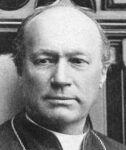
lead it had deep ties to the Emerald Isle. Bishop John McMullen was an immigrant from County Down. Bishop Henry Cosgrove was the son of Irish immigrants. And Bishop James Davis was from County Kilkenny. People of Irish descent continue to serve the diocese today. As we confront the challenges facing our country, we should
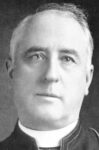
remember an important lesson Irish immigrants of the past have for us: when times got tough and problems seemed unsolvable, they turned to Jesus, particularly in the Blessed Sacrament.
For about 300 years, the Irish endured British persecution, including penal laws which denied civil rights. During this period it was a crime to celebrate Mass. Priests were executed for defying the ban and lay people faced fines or imprisonment. Then a potato famine killed more than a million Irish from 1845-52. In some cases, government sponsored food aid was withheld unless Catholics agreed to abandon their faith. Most refused. The threat of starvation forced about 1 million to 2 million to flee to other countries. In the aftermath of perhaps the darkest time in Irish history, a Church-approved Marian apparition occurred in Knock, Ireland, in 1879. Fifteen witnesses saw Mary, Joseph, and John the Evangelist by a parish church for about two hours. According to eye-witness accounts: “To the left of St. John and somewhat behind him there was an altar … and upon the altar stood a lamb of five or six weeks old …”
The presence of the lamb on the altar is believed to be heaven’s acknowledgement of the Irish people’s stalwart belief in the Eucharist despite ruthless attempts to destroy it.
“To the people of that time, emerging out of a dark night when they had proved their fidelity to the Mass, the sacrifice of Redemption, (the lamb) was given as consolation,” according to Father James, O.F.M.., a professor who wrote about the apparitions in 1950.
Recently, Bishop Dennis Walsh sent a letter encouraging clergy to hold Holy Hours for Peace and Justice this Lent in parishes. It’s part of a national initiative by U.S. bishops.
“In light of the extraordinary political upheaval and tension currently fracturing our communities, our families, and even the body of the Church itself, I believe this is not just a recommendation, but a spiritual necessity,” he wrote.
Bishop Walsh added, “I realize that in some of our communities, participation may be low, or the fatigue of the current climate may keep people away. However, even if you suspect your parishioners may not attend in large numbers, I ask that you personally hold this Holy Hour in your church.”
It’s startling that we may not be able to get a good response to invitations to Holy Hours from pastors, especially considering the sacrifices of the past. If doubts or other concerns are keeping you away from adoration and Mass, remember the example the Irish set. Many risked their lives to prove the bread of life is more than just a symbol. In his book, Bishop Barron explains why the Blessed Sacrament has the ability to change people who consume it. The history of Ireland demonstrates that the Eucharist can also change the fates of nations. Our country needs us to pray for it. If you get offered a chance to participate in a Holy Hour this Lent, I challenge you to defy expectations and go. Or if you can’t, at least spend some time praying in adoration alone. Maybe even on St. Patrick’s Day.
Dan Russo, editor
