

Give women and girls the freedom to thrive

By Barb Arland-Fye
Messenger Editorial

War has been raging for nearly three decades in the eastern part of the Congo, ripping apart the fabric of family life. First-hand stories of the atrocities committed against women, men and children disturbed Pope Francis during his visit there last month. Rape, an especially horrific tool of war, has lasting effects far beyond the initial violence. As a Congolese refugee told The Catholic Messenger, rape brings shame and stigma to the survivors and to the children conceived in rape. Our voices need to speak out against this lethal tool of war, fueled by insatiable greed and a thirst for power.

All of us, sisters and brothers in Christ, have a role to play in fostering peace and ending this war and its devastating consequences. Women must be at the negotiating table if peace is to become a reality – in the Congo, in South Sudan, in Ukraine or other countries mired in war.

“Over the past few years, violence against women and girls has increased, while women’s representation in peace processes has declined, demonstrating that the current approach is falling short.” That observation is contained in a March 7 statement delivered to the UN Security Council on behalf of Archbishop Gabriele Caccia, permanent observer of the Holy See to the United Nations.

 The Holy See’s statement referenced UN Security Council Resolution 1325, adopted 23 years ago, which “recognized the importance of women’s involvement in peace and security issues to achieving long lasting stability” (https://tinyurl.com/57evsvry). The statement also quoted Pope Francis in his January address to the Diplomatic Corps accredited to the Holy See. The Holy Father said, “when human rights are fully recognized for all, women can offer their unique contribution to the life of society and to be the first allies of peace.”

In “many countries, women are considered second-class citizens,” Pope Francis said, facing violence, abuse and limited access to education, employment, healthcare and other basic necessities. The statement said the Holy See deplores “the situation faced by many women and girls, who are systematically denied the benefit of education.”

During his apostolic journey to the Democratic Republic of the Congo and South Sudan, “Pope Francis highlighted the potential of women to transform violent societies into peaceful ones, when they ‘are protected, respected, valued and honored,’” the statement said. “To unlock this potential, this Council must ensure that women, especially ‘mothers who know how life is generated and safeguarded,’ receive opportunities to participate more fully in peace processes and in all facets of ‘political life and decision-making processes.’”

Here are ways we can help foster peace and restore the fabric of the family in the Congo:

  • Read. Veve Nduhirahe, a Congolese refugee and member of St. Thomas More Parish in Coralville recommends “The Power of Women, A Doctor’s Journey of Hope and Healing,” by Dr. Denis Mukwege. He and the Mukwege Foundation are working “towards a world where sexual violence in conflict is no longer tolerated, where survivors have the freedom to speak out and be heard, and where they can receive the care and reparations they are entitled to” (mukwegefoundation.org/the-power-of-women/). Other reading sources: Women for Women International (https://tinyurl.com/2p94hfj6); UN Women Africa (https://tinyurl.com/4zjhzz38); Caritas Congo (https://tinyurl.com/3c62dcr4/); and the U.S. Agency for International Development (USAID) (https://tinyurl.com/477mk4e6).
  • Advocate. Ask Congress to support robust funding for USAID in the next budget. Since 1960, when DRC gained independence, USAID has “partnered with the government and people to improve Congolese citizens’ quality of life, increase the effectiveness of national institutions, and strengthen the foundation for durable peace in eastern DRC” (https://tinyurl.com/477mk4e6).
  • Support the education of women and girls. As Pope Francis has said, “Education is essential for fostering societies which treat women and men equally. This begins with the family, the ‘fundamental group unit of our society’” (March 9 statement of the Permanent Observer of the Holy See to the United Nations).

The World Bank Education Global Practice report on Improving Education Outcomes for Girls and Young Women is a place to learn more about what we can do.

  • Pray. Our consistent prayers will help us to keep in mind the women and girls of the Congo, as well as their families, and strengthen our resolve to use our resources to provide them with the tools they need to end war and foster peace.

Barb Arland-Fye, Editor
arland-fye@davenportdiocese.org
Posted on

Persons, places and things: On our Lenten journey

By Barb Arland-Fye
Editor

Sometimes when he hears a person’s confession, Bishop Thomas Zinkula will give this penance: “I want you to think of someone you know who is struggling right now and pray for that person.” We, as sinners, can focus too much on ourselves and in the process lose track of others, the bishop told me during this month’s Catholic Messenger Conversations podcast.

Arland-Fye

His Lenten letter to the people of the diocese inspired the podcast topic, “On the Lenten journey.” In his letter, I noted that he raised a “both/and” point. While it is good to reflect on the “I”, this season — as in what am I doing this Lent, Bishop Zinkula said we also need to reflect on the “we” — what are we doing this Lent.

As we approach the fourth Sunday of Lent, it seems appropriate to reflect on our journey thus far and what adjustments to make. Do we need to change course? In my own reflection preparing for the podcast, I wondered how to balance the individual and communal aspects of Lent. How can “we” make this Lenten season a fruitful one, I asked the bishop.

In our tendency to focus on personal prayer, we can lose sight of the communal aspect of life and the common good, he said. When we consider the common good, our petition to pray for Aunt Suzy, who is ill, becomes a prayer for Aunt Suzy and all who are ill. We pray for all people who are seeking employment and not just our loved ones.

I asked the bishop to share some ways in which we can engage in the traditional Lenten practices of prayer, fasting and almsgiving that can stretch us this Lenten season. His examples, taking the communal approach, enrich and expand our Lenten practices and give them more meaning, in my mind.

We do not fast to lose weight, for example, but to unite our suffering with the suffering of others who do not have a choice. Almsgiving should inspire us to give freely of ourselves, lifting up the needs of others and trusting that God will provide for our needs. Communal prayer invites us to participate in a small faith-sharing group, Bible study, daily Mass, Stations of the Cross and even fish fries! “There’s something good in coming together and enjoying that side of Lent,” Bishop Zinkula said.

How do you evaluate your progress on the journey? I asked. What happens when you slip?  “It’s not the end of the world. It’s not a sin,” the bishop said. Sometimes when people slip, they give up in discouragement over perceived failure. So, “regroup, recommit and keep going. It’s not a matter of progress or competition or success,” he said. “It’s growing closer to the Lord. It’s growing deeper in love with God and Jesus and getting to know them better.”

In his letter, Bishop Zinkula described Lent as “a journey that calls us to embrace the life-long task of conversion, of turning away from sin and embracing the Gospel.” I asked him for examples of how to do that. The sacrament of reconciliation came to mind immediately, he said. “It forces us to take a good, close look at our lives.” This “sacrament of honesty” inspires us to examine our conscience more seriously than we would in a private examination of conscience, he said.

Sin interferes with our relationships, how we feel about others and our relationship with God. “We’re invited to name it and put it on the table. God can’t do anything or he’s not going to do anything until we give this to him, give it to Jesus on the cross.” We feel better about ourselves and closer to Jesus through our participation in the sacrament of reconciliation. “How can we not be better people with a God who loves us like that, who died on the cross to free us from sin and death?”

You can listen to the podcast at www.catholicmessenger.net/podcasting or on your favorite podcasting app.

(Contact Editor Barb Arland-Fye at arland-fye@davenportdiocese.org)

Posted on

Appointments

OFFICIAL
Diocese of Davenport
Bishop’s Office
Davenport, Iowa 52804

Appointments


Effective Saturday, July 1, 2023

Rev. James G. Betzen, C.PP.S., relieved of present assignment as pastor of St. Mary of the Visitation Parish, Ottumwa, to reassignment by the Missionaries of the Precious Blood.

Rev. Anthony J. Herold, relieved of present assignments as pastor of Sacred Heart Parish, Newton, and Dean of the Grinnell Deanery to retirement.

Rev. Timothy J. Regan, relieved of present assignment as chaplain at University of Iowa Hospitals and Clinics, Iowa City, to retirement.

Rev. David F. Wilkening, relieved of present assignments as pastor of St. Mary Parish, Williamsburg; St. Joseph Parish, North English; and St. Patrick Parish, Marengo, to retirement.

Rev. Stephen J. Witt, relieved of present assignment as pastor of St. Mary Parish, Iowa City, to retirement.

Rev. Gary L. Beckman, relieved of present assignments as pastor of St. Wenceslaus Parish, Iowa City, and St. Bernadette Parish, West Branch, and assigned as pastor of Holy Family Parish, Fort Madison, and St. Joseph Parish, Montrose.

Rev. James J. Flattery, relieved of present assignments as parochial vicar of Divine Mercy Parish, Burlington, and St. Mary Parish, Dodgeville, and assigned as pastor of St. Mary Parish, Tipton; St. Mary Parish, Mechanicsville; and St. Bernadette Parish, West Branch.

Rev. Scott M. Foley, while remaining as pastor of St. Mary Parish, Grinnell, assigned as pastor of St. Patrick Parish, Brooklyn.

Rev. Martin G. Goetz, relieved of present assignments as pastor of Divine Mercy Parish, Burlington, and St. Mary Parish, Dodgeville, and Dean of the Keokuk Deanery, and assigned as pastor of Sacred Heart Parish, Newton.

Rev. Jacob M. Greiner, while remaining as Director of Seminarians and Director of Vocations for the Diocese of Davenport, relieved of present assignment as pastor of Our Lady of Victory Parish, Davenport, and assigned as pastor of Divine Mercy Parish, Burlington, and St. Mary Parish, Dodgeville.

Rev. Patrick J. Hilgendorf, relieved of present assignments as pastor of St. Patrick Parish, Ottumwa, and St. Mary Magdalen Parish, Bloomfield, and Dean of the Ottumwa Deanery, and assigned as pastor of Our Lady of Victory Parish, Davenport.

Rev. John D. Lamansky, relieved of present assignments as parochial vicar of Jesus Christ, Prince of Peace Parish, Clinton, and chaplain of Prince of Peace Catholic School, Clinton, and assigned as pastor of St. Wenceslaus Parish, Iowa City, with ministry to the Hispanic community at St. Patrick Parish, Iowa City.

Rev. Robert A. Lathrop, while remaining as pastor of Holy Trinity Parish, Keota, and St. Mary Parish, Sigourney, and as administrator of Ss. Joseph and Cabrini Parish, Richland, assigned as pastor of St. Joseph Parish, North English.

Rev. Khoa A. Le, relieved of present assignment as parochial vicar of Ss. Mary & Mathias Parish, Muscatine, and assigned as parochial vicar of Jesus Christ, Prince of Peace Parish, Clinton.

Rev. Scott G. Lemaster, while remaining as pastor of St. Bridget Parish, Victor, relieved of present assignment as pastor of St. Patrick Parish, Brooklyn, and assigned as pastor of St. Patrick Parish, Marengo.

Rev. Symphorien O. Lopoke, relieved of present assignment as parochial vicar of St. Mary Parish, Iowa City, and assigned as pastor of St. Mary Parish, Iowa City.

Rev. Dale E. Mallory, while remaining as parochial vicar of St. Mary of the Visitation Parish, Ottumwa, assigned as parochial vicar of St. Patrick Parish, Ottumwa, and St. Mary Magdalen Parish, Bloomfield.

Rev. Francis Mensah, while remaining as pastor of St. Peter Parish, Cosgrove, and St. Mary Parish, Oxford, and Defender of the Bond for the Marriage Tribunal of the Diocese of Davenport, assigned as pastor of St. Mary Parish, Williamsburg.

Rev. Richard U. Okumu, relieved of present assignments as pastor of St. Mary Parish, Tipton, and St. Mary Parish, Mechanicsville, and assigned as senior priest at St. Thomas More Parish, Coralville, and St. Patrick Parish, Iowa City.

Rev. David O. Paintsil, assigned as parochial vicar of St. Mary Parish, Iowa City.

Rev. Joseph P. V. Phung, relieved of present assignments as pastor of Holy Family Parish, Fort Madison, and St. Joseph Parish, Montrose, and assigned as pastor of St. Patrick Parish, Iowa City.

Rev. Joseph M. Sia, relieved of present assignments as pastor of St. Patrick Parish, Iowa City, and Director of the Recently Ordained Program for the Diocese of Davenport, and assigned as pastor of St. Patrick Parish, Ottumwa; St. Mary of the Visitation Parish, Ottumwa; and St. Mary Magdalen Parish, Bloomfield.

Deacon Christopher L. Kabat, while remaining in present diaconal assignment at St. Wenceslaus Parish, Iowa City, relieved of diaconal ministry at St. Bernadette Parish, West Branch.

Deacon David Montgomery, while remaining in present diaconal assignments at St. Peter Parish, Cosgrove, and St. Mary Parish, Oxford, assigned to diaconal ministry at St. Mary Parish, Williamsburg.

Deacon John S. Osborne, while remaining in present diaconal assignment at St. Mary Parish, Grinnell, assigned to diaconal ministry at St. Patrick Parish, Brooklyn.

Deacon Joseph T. Rohret, while remaining in present diaconal assignments at St. Peter Parish, Cosgrove, and St. Mary Parish, Oxford, assigned to diaconal ministry at St. Mary Parish, Williamsburg.

Thomas Zinkula                   Deacon David Montgomery
Bishop of Davenport           Chancellor

Posted on

Father Wiegand — priest, widower, father, grandfather

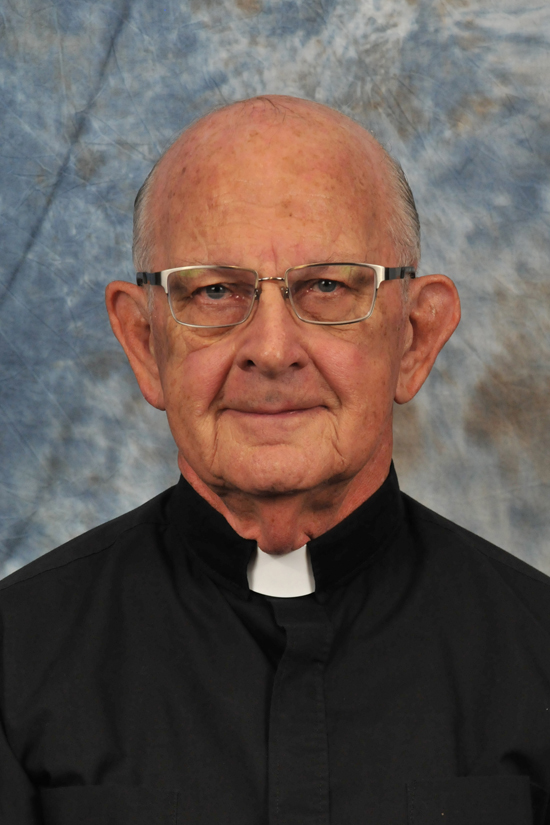
PELLA — Father William Wiegand, who served the Diocese of Davenport as a permanent deacon and later as a priest after the death of his wife, Ruth, died March 7 at age 87.

Fr. Wiegand

Born March 4, 1936 in Illinois to John and Madeline (Hasler) Wiegand, he served in the U.S. Air Force and worked for Sheller Globe in Keokuk; AE Staley in Decatur, Illinois; Pella Corp in Pella; and SHARE Iowa in Oskaloosa. He and Ruth were married June 9, 1956 and had three children. Ruth died in 2001.

Wiegand graduated from Southern Illinois University in Edwardsville in 1993 with a bachelor’s degree and in 1994 with a master’s degree. He was ordained to the diaconate by Bishop Gerald O’Keefe on June 4, 1988. Then-Deacon Wiegand served at St. Mary Parish in Pella until he began studies for the priesthood at Sacred Heart School of Theology in Hales Corner, Wisconsin. On June 4, 2005 he was ordained to the priesthood by Bishop William Franklin at Sacred Heart Cathedral in Davenport.

Father Wiegand served as parochial vicar at Ss. John & Paul Parish in Burlington from 2005-07. He served as administrator, then pastor, at St. Alphonsus Parish in Davenport and St. Peter Parish in Buffalo from 2007-09. He retired from active status in 2009.

His survivors include his children, Cathryn and John Segur of Rogers, Arkansas; Karen and Wayne Van Walbeek of Monroe, Iowa; and Leroy and Natasha Wiegand of Plymouth, Indiana; five grandchildren and nine great grandchildren.

Posted on

HHSI gave Davenport man a home and a purpose

Barb Arland-Fye
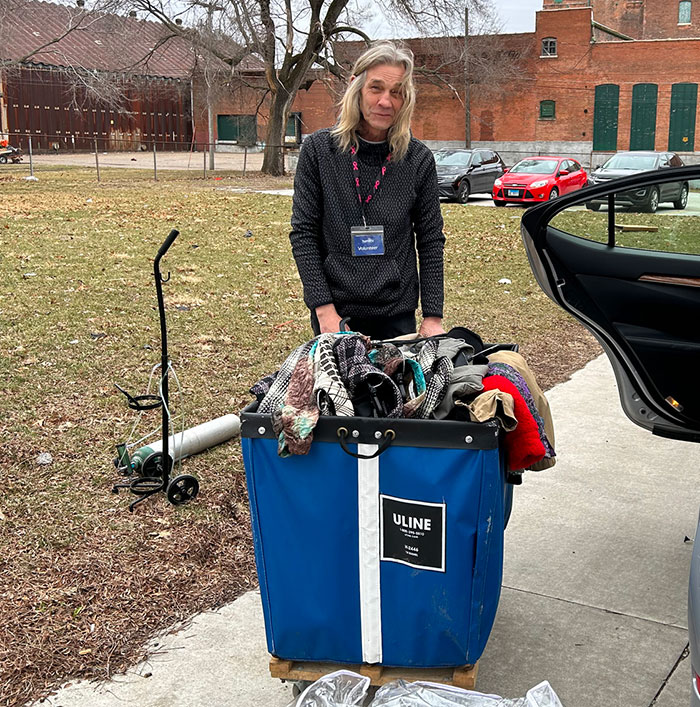
Ricky Peed prepares to haul a laundry cart full of donated clothing into the warehouse on the Humility Homes & Services, Inc. campus in Davenport. Peed is grateful to HHSI for providing him with supportive housing and his work, processing donations for the nonprofit agency. He also is an advocate for housing for all
people.

By Barb Arland-Fye
The Catholic Messenger

DAVENPORT — Ricky Peed sorts clothing inside a former school building that serves as a warehouse on the campus of Humility Homes & Services, Inc., a nonprofit agency committed to ending homelessness. The carefully selected clothing and other household items will go to the Fresh Start Center across the street, which provides HHSI participants with basic home essentials as they start their lives over.

Hearing a knock on the door, Peed sets down the garment he had been inspecting to respond to the visitor, a woman who announces she has a car full of clothing that a local shop donated. Peed and John Hanes, both employed through AARP, head out the door and down the ramp with a large laundry cart on wheels. After loading the items, which teeter over the top of the cart, Peed, a wiry-framed man, takes a running start to push the cart up the ramp and into the warehouse.

“This job is very physically demanding,” says Peed, who takes a brief pause from his work after pushing the cart into a corner. “I love it,” he declares. “I’m helping other people. I’m changing the quality of their lives, getting stuff (ready) that’s useful” for them.

In Iowa, 2,419 people were experiencing homelessness in 2022 – 7.6 for every 10,000 people, according to the U.S. Department of Housing and Urban Development’s 2022 Annual Homelessness Assessment Report to Congress. Of that total, 1,666 were individuals and 753 were people in families with children (https://tinyurl.com/2p8rc9pd).

HHSI, which provides services in the Quad-Cities area, served 1,339 individuals throughout all of its programing, according to its 2022 Gratitude Report. “We’re seeing newer homelessness,” said HHSI Executive Director Ashley Velez, referring to people experiencing homelessness for the first time, due to the pandemic and inflation among other challenges.

Peed feels a strong connection with people who are homeless because for many years he was among them until HHSI provided him with a life-saving opportunity — supportive housing and his job processing donated items for quality assurance. He has worked in the warehouse for five and a half years, longer than anyone else, he says. Next month, he will celebrate his 60th birthday.

“I’m lucky to have made it this long. The average homeless male lives to 50.” His estimate is close. The National Institutes for Health estimates the average age at death of a homeless male is 56.27 years and 52 years for a homeless female. Nearly 50% of those deaths are attributable to smoking. Peed readily acknowledges his addiction, stepping outside for a smoke on the cold March afternoon of an interview with The Catholic Messenger.

Lived experience

However, what nearly ended his life is his addiction to alcohol. He previously worked as a Certified Nursing Assistant (CNA) and a Certified Medication Aide (CMA) among other careers until alcoholism consumed his life. He received treatment, went through the 12-step program of Alcoholics Anonymous (AA) and was sober for nearly 25 years, he said.

Peed was living and working in Cedar Rapids, Iowa, but “I was in a relationship that went into the wrong direction.” He moved back to Davenport and ended up on the streets after running out of

Barb Arland-Fye
Ricky Peed processes donations in the Humility Homes & Services, Inc. warehouse in Davenport earlier this month.

money. “I had to learn where the meal sites were, where I needed to get clothing, where I could shower and where I could sleep.” McAnthony Window at St. Anthony Parish in Davenport was among the meal sites Peed frequented and where he met John Cooper, the parish’s pastoral associate and business manager.

“I was giving a retreat for homeless persons in 2018 when a participant (Ricky) impatiently asked, ‘What do you know about homelessness?’  He was right, I don’t have firsthand experience,” Cooper recalled. “Ricky has lots of it. He can be the wounded healer for people facing chronic homelessness. Add to that, he’s super smart, full of wisdom and is very empathetic. His faith gives him the conviction to know that the right to shelter is a God-given right.”

Cooper describes their relationship as real. “I asked him one day, how many prayers will it take to get you to stop drinking and get off the street?  With his permission, I wrote three stories asking the parishioners to pray for him to stop drinking and get off the street. He came up to the parish center knocking on the door to talk one night. He had been drinking. I told him I was setting up for a funeral the next day. I looked him in the eyes and said, ‘If you don’t get off the street and take better care of yourself, it’ll be your funeral I’m arranging.’”

Peed ended up in the hospital after falling against a metal table on Davenport’s riverfront and fracturing his ribs. He also had pneumonia. It was time to come in from the cold. A friend of his lived in an HHSI apartment, which inspired Peed to apply for an apartment. The vetting process took time, but HHSI accepted him into its supportive housing program. “If it weren’t for Humility, chances are I could be dead,” he said.

Work in progress

Now Peed serves as advocate for people whose shoes he has walked in, serving on HHSI’s Lived Experience Advisory Board Committee. “I’m a mouthpiece for homeless people. I advocate for their rights. Everyone has a right to a place to live,” he said. HHSI’s Gratitude Report speaks to the importance of the committee. “We are living our mission honoring the legacy of the Sisters of Humility of Mary and (the) lived experiences of those we serve.”

Cooper said that since Peed has been off the streets, “we’ve teamed up to give presentations on homelessness. “I even had him talk to our parishioners and the youth group.  Right now, he sort of appears at my office window when I least expect it with that classic Ricky grin on his face. I tell him to get a haircut and let me get him an appointment with a dentist.  He just continues to grin.”

Last year, Peed spent a night in jail on a public intoxication charge. “I’m an alcoholic,” he admits, but “I don’t drink before work or during work … It hasn’t affected my ability to perform.” HHSI is aware of his situation. “We all have our ups and downs, whether we are homeless or not,” said Velez. “It’s how you get back up and realign yourself. When he tells his story he is so open about it.” The supportive housing program in which Peed participates focuses on identifying the reason for homelessness, addressing it, building up coping skills and providing support around the individual, Velez added.

Back at the warehouse, Peed answers the phone. A customer at the Fresh Start Center needs help getting a lamp that is beyond her reach. Peed sends Hanes over to assist. Their shift for the day is nearly complete and Peed says, with conviction, “I tell people I’m an instrument from God. We’re all sent here to help, to help promote change and to make progress in (our own) life and in the lives of others.”

HHSI event to raise awareness and encourage involvement

Humility Homes & Services, Inc. is hosting a social hour March 30 from 4-7 p.m. at Me & Billy, 200 W. 3rd St., Davenport.

This free event provides an opportunity for people to learn more about Humility Homes & Services, its mission and its interest in getting people involved with HHSI.

Register at humilityhomes.org\events.

Help for those dealing with eviction or homelessness

Community Action of Southeast Iowa works toward helping people out of poverty, assisting them in obtaining decent and affordable housing, adequate nutrition, employment, affordable and quality childcare, education and training so they may become self-sufficient and improve their quality of life. Visit the website (caofseia.org).

The Quad Cities Housing Council Facebook page suggests these resources for persons facing eviction or homelessness:
Humility Homes and Services Coordinated Entry: (563) 499-3081
Scott County Community Services: (563) 326-8723
Salvation Army: (563) 324-4808
Open Door: (563) 265-5500
QC Open Network: (309) 736-6766

Shelters in Southeast Iowa

Burlington Area Homeless Shelter, 123 North Marshall St., Burlington (319) 754-6791.
Transitions DMC, 515 South Main St., Burlington (319) 209-2217.
Emma Cornelius Hospitality House, 2733 Avenue N., Fort Madison (319) 372-3983.
Domestic Violence Intervention Program (800) 373-1043.

Posted on

New column explores the ‘gray spaces’ that teach us about God, ourselves, others

By Sarah Adams
Gray Space Graces Column

In a world that seems more polarized than ever, how can we engage with one another in a constructive way? How can we better understand and be better understood? Jesus tells us that he came so that we may have life and have it more abundantly (John 10:10). How can we accept and live the abundant lives that Jesus so deeply desires to give us?

Adams

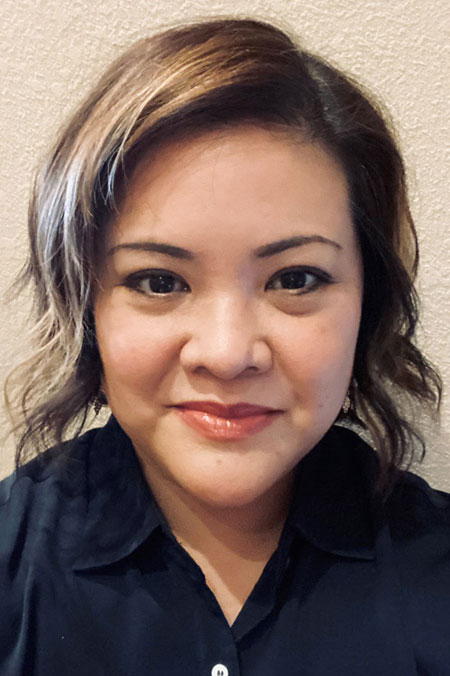
Welcome to the new column, “Gray Space Graces.” I’m Sarah, and I’m so glad you’re here. Last November, The Catholic Messenger editor asked me to write a reflection for the third Sunday of Advent. As I began to brainstorm my focus from that week’s readings, this idea of “gray area” came to mind. I’m still trying to understand what it means and why it feels so important, but here’s my best try: the gray area is the space of the in-between, the liminal. It sometimes feels like tension and at other times, confusion. If we choose to spend time wrestling (and resting) in this gray area, I think we may learn more about what it means to be a human living the abundant life that God offers us.

I hope you will walk with me on this journey to explore together what this gray space is all about and what it can teach us about ourselves, others and God. As this column unfolds, it may include stories of my own life as well as examples that I find in books, articles and other people.

Recently, I read a book called, “The Anthropocene Reviewed,” by John Green. In one chapter, he explores the way in which we experience the news today. Green writes, “News focuses on what is new, and rarely the context behind it … there was [is] so much news. News that was [is] forever breaking — that there was [is] never time for context.”

Green tells of his experience living with a friend during the 2003 U.S. invasion of Iraq. His roommate was from Kuwait and had family in Iraq. One evening they were watching cable news coverage of the war when Green’s roommate began laughing. When asked what was funny, he explained that the newscaster, who stood in front of a graffitied wall reporting on the “anger and hatred in the streets,” had a message behind him that translated to, “happy birthday sir, despite the circumstances.” I think the way the news in our modern world functions is representative of a larger issue. As Green observes, we rarely take the time for the context we need to truly understand a situation, concept or person. We wish to know what is going on but forget to ask why it’s happening in the first place.

The word “context” is a combination of the Latin words “con” (together) and “textre” (to weave). So, when we take the time to learn context, we consider as many “threads” as we can and try to understand how they are woven together. Our model in this endeavor is the ultimate weaver, the one who created us to be relational — to crave connection and belonging.

Jesus, in his earthly life, situated himself directly in gray areas and wove together what had been previously seen as “un-weavable.” Jesus greatly loved a diverse group of followers: women and men, old and young, poor and rich, Roman and Jewish, scholar and illiterate. He understood the ministry of presence — being with people as they are. In doing this, Jesus showed us what abundant life looks like. It looks like intentionally being with each other — even beyond our comfort zones, even in tension, even with confusion, even in disagreement. What would it look like for you to step into the gray area today? Starting up a conversation with someone waiting in line next to you? Calling a friend that you had a disagreement with? Asking a family member why they feel the way they do about a certain issue? Doing more research on a situation that you have your mind made up about?

Jesus is inviting us into the gray space, into abundant life. Will we dare to enter?

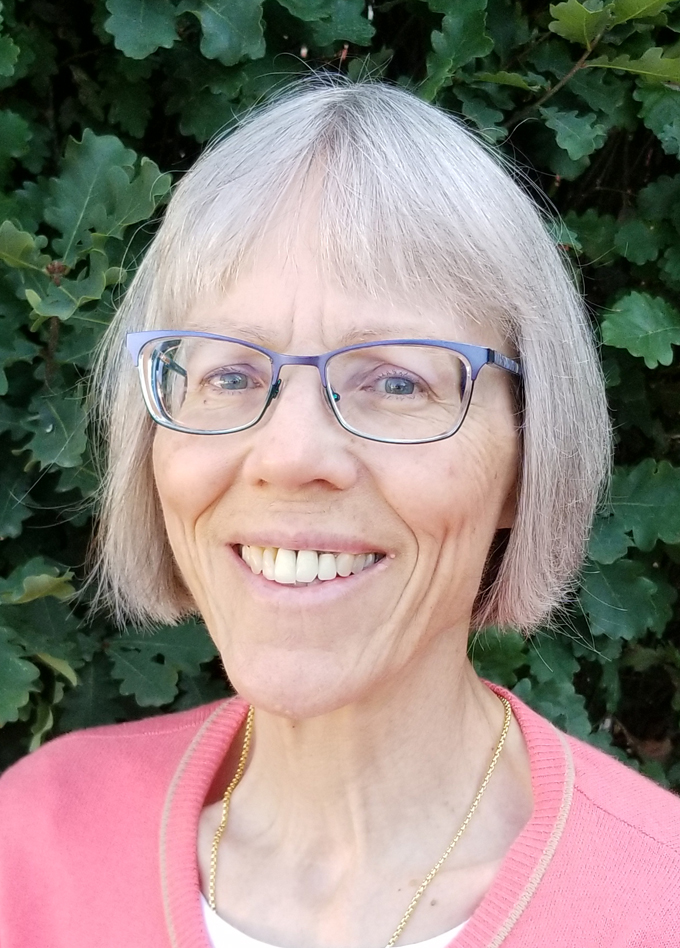
(Sarah Adams is social media coordinator for the Diocese of Davenport.)

Posted on

Jesus heals the man born blind

Pixabay

By Francesca To
For The Catholic Messenger
Lent 2023 Series

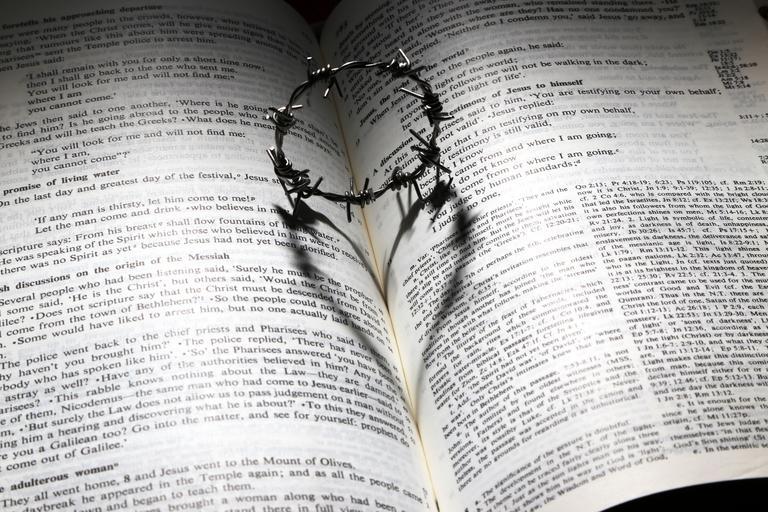
In the Gospel for the fourth Sunday of Lent, Jesus proclaims that he is the light of the world. He performs the impossible — he gives sight to a man inflicted with blindness from birth, a condition that is permanent and incurable. He does this by making clay out of mud and saliva, two very common materials that by themselves have no proven healing properties.

As far as medical miracles go, this is one that the physician in me finds most impressive. In our modern day lives, we might hear of someone unexpectedly healed of a chronic disease, whose cancer inexplicably vanished, or who was revived after death. These are occurrences so rare and incredible that most people would deem them miraculous. But there are those who might argue that the human body is designed to heal itself, that there can be errors in diagnosis or that someone who was presumed dead might not have been so. Blindness from birth, however, is fixed and unmistakable. Despite all the advances of modern medicine, a cure for it is yet to be found. By performing an act that is impossible to humans, Jesus provides incontrovertible proof that he is divine. By restoring the blind man’s sight, he gives function to an organ that should be incapable of it. Jesus shows that by his grace alone, we can accomplish the exact task for which nature deems us unfit.

Did the blind man ask to be healed? In the Gospel story, it was Jesus who came to the blind man. This man had grown accustomed to living in darkness. He understood that his defect was permanent.  He did not seek Jesus out, but Jesus saw his suffering and healed him. Sometimes we are so overwhelmed by our own darkness — due to physical or mental illness, due to poverty, due to family or personal conflict, due to trauma, due to personal loss, and so on — that we resign ourselves to it. How can we seek a relief that we do not know exists? Here, Jesus comes to us to offer us a life we cannot even fathom.

Did Jesus need mud and saliva to cure the blind man? Did the man need the water from the Pool of Siloam to complete his healing? We know that Jesus did not require any of these things. Rather, these are reminders that we are not passive participants in our own salvation. The blind man allowed Jesus to cover his eyes in mud, and when he was told to go wash in the Pool of Siloam, he did so. His cure did not occur without his cooperation. Jesus may be present, he may even seek us out, but he will never force himself on us. We have to allow him into our hearts and lives for transformation to take place.

The blind man knew nothing of the existence of Christ.  Yet, the moment his eyes saw light, he understood that his savior was God. His eyes were opened physically and spiritually. He bore witness to this miracle at the expense of being ridiculed by everyone he knew and at risk of being expelled from his own community. How many of us are brave enough to do as he did? To recognize that the grace we receive is indeed from God, and to behave as a testament to that grace even in difficult circumstances?

This Gospel is a powerful reminder that no place is impenetrable to God’s goodness and no darkness impervious to his light and that we are never too flawed to become instruments of his love and grace. We are called to accept God’s invitation to salvation and to share his light with the rest of the world.

(Francesca To serves on the Diocesan Pastoral Council and the Diocesan Review Board. She is a member of Divine Mercy Parish in Burlington/West Burlington.)

Posted on