For The Catholic Messenger
DAVENPORT – A collaboration between St. Ambrose University and Loras College-Dubuque offers Loras undergraduate students the option to pursue graduate study in physical therapy while completing their bachelor’s degree at Loras. This option allows students to complete their undergraduate degree and a Doctor of Physical Therapy degree in five and a half years through a 3+2.5-year articulation agreement. The agreement guarantees the top five Loras students interviews with St. Ambrose’s Doctor of Physical Therapy (DPT) Program as part of the application process.
The St. Ambrose Physical Therapy Department is comprised of a DPT program and an Orthopedic Residency program. The DPT program includes training in clinical decision-making and evidence-based practice, and skills to care for medically complex patients. The DPT students learn in an inter-professional environment with the seven other healthcare programs in the College of Health and Human Service: kinesiology, nursing, occupational therapy, physician assistant, public health, social work and speech and language pathology. St. Ambrose’s DPT students have a licensure pass rate of 100% and 100% job placement rate within one year.
“We are eager to provide this opportunity to Loras College students as we continue to build our partnership to ensure enhanced access through multiple pathways for students,” St. Ambrose Provost Paul Koch said. “We remain committed to serving the healthcare needs of the region, including rural healthcare, through programs such as this.”
Loras College students with a GPA of 3.0 or higher, and who have completed the application requirements, will be eligible to apply in their junior year for admission to St. Ambrose’s DPT program. If accepted, students will transition to St. Ambrose University in their fourth year. Students who complete all requirements will earn the DPT degree from St. Ambrose University in two and a half years. The first cohort of Loras students may apply for admission to St. Ambrose’s 3+2.5 DPT program for the fall 2024 semester.
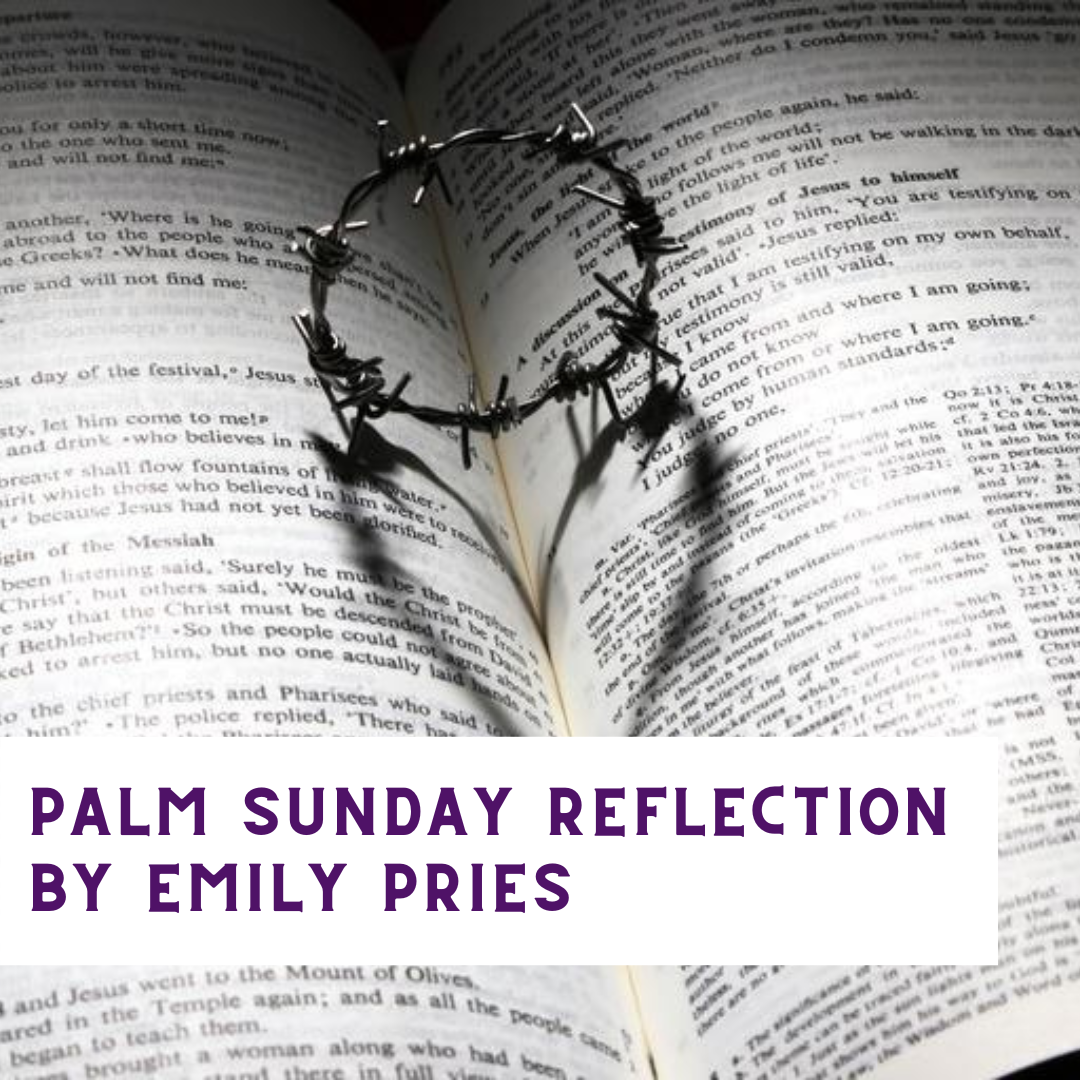
In this Palm Sunday’s Gospel, we see the culmination of Jesus’ 33 years of life and ministry. All the time he spent cultivating relationships with his disciples, walking with them, teaching them, sharing meals and showing them the Way — only to be betrayed by the friends he thought would be there with him until the end.
Pries
‘“What are you willing to give me if I hand him over to you?’ They paid him thirty pieces of silver, and from that time on he looked for an opportunity to hand him over” (Matt 26:15-16).
Can you imagine the pain and anguish, not only to endure the visceral suffering that Christ endured, but the deep, penetrating grief in knowing that those you loved and who had loved you in return had ultimately turned against you? Jesus answered him, “Friend, do what you have come for” (Matt 26:50).
As we walk the journey of Christ’s final day with him in the Gospel, I consider how I feel as I participate in praying the Stations of the Cross. I think about the many people Christ encounters along the way — Simon, forced to carry Jesus’ cross, an unwilling bystander with this duty, this heavy chore thrust upon him in Jesus’ time of need. How many times have we had an experience like this? We don’t know how to help — and maybe we don’t really want to. We’re paralyzed by fear, shame and the unknown so we just go along with the crowd. Sometimes, even in these forced support roles we take on in friendship, in service or assistance to someone whom we know and love or to a complete stranger, we learn, grow, and find that the interaction makes a difference in the life of those we help. It breaks and changes our hearts as we walk this difficult road with someone we never expected to walk with.
In Jesus’ final moments he cries out, “Eli, Eli, lema sabachthani?,” which means, “My God, my God, why have you forsaken me?” (Matt 27:46). Have you ever felt forgotten, forsaken, abandoned by God? Even Jesus, in his suffering, felt this way. He asks in prayer, three times, “My Father, if it is possible, let this cup pass from me; yet, not as I will, but as you will” (Matt 26:42). The words of Amazing Grace come to mind as I reflect on this:
And when I think that God, His Son not sparing Sent Him to die, I scarce can take it in That on the cross, my burden gladly bearing He bled and died to take away my sin.
When we consider all Jesus endured for our sins and that God didn’t spare his own son for our lives, it does take your breath away. Yet time and again we forget, forsake and abandon Jesus. In our sinfulness, in our choices, even as we walk with him, we turn away from him. Even in this reality, there Jesus is, ready to bring us, his “lost sheep,” back into his fold, to wipe us clean, to make us new again. The words of Amazing Grace certainly ring true in this instance. Only by God’s grace, we are redeemed; not by what we have or could ever do to earn it. On that Easter morning, when the stone is rolled away and we know our Christ is risen, we will again be reminded that Jesus’ victory over the grave was won for all of us in his care.
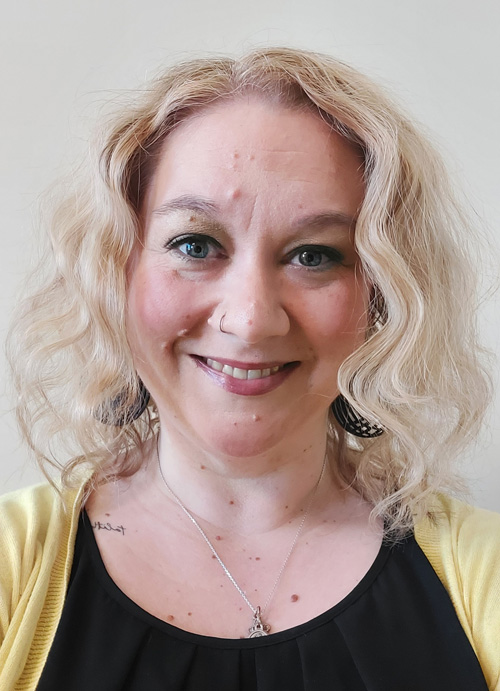
(Emily Pries is the executive secretary of Bishop Thomas Zinkula.)
Tim Elskamp, who lives with Down syndrome, radiates love in his role as an altar server at St. Ann Parish in Long Grove, his parents, Dan and step-mother Rhonda Elskamp, say. His ministry began about a year ago, when church roof repairs required celebration of the Mass in the parish chapel. Parishioner Mike Limberg trained Tim, whose favorite responsibility is holding the Roman Missal for the pastor, Father Joe Wolf, as he recites the prayers during Mass.
“He just shines when he’s up there on the altar. He thinks so much of Father,” Dan says. “I was a server a long time ago. It makes me feel good that Tim is doing what I did.” Rhonda says, “People have told me they love seeing Tim up there. He just radiates joy.” Persons with disabilities “just want to be included,” she adds. Father Joe describes Tim as “a delightful man who does a beautiful job assisting at the altar.”
March is Developmental Disability Awareness Month, a good time to learn more about the gifts of persons with developmental disabilities. How might we tap into their potential in service to the Church? The National Catholic Partnership on Disabilities (ncpd.org), shares a message that Pope Francis gave in 2019 at the International Day for Persons with Disabilities. He said, “We are called to recognize in every person with disabilities, even complex and serious disabilities, a unique contribution to the common good through their original life stories. … and to recognize them as persons of equal dignity, as brothers and sisters in humanity.”
A story in this week’s issue (Page 6) focuses on the progress and challenges regarding efforts to include people with disabilities in “the everyday mission for the Church.” The story notes that one in four adults in the U.S. (about 26%), have some type of disability, according to the Centers for Disease Control and Prevention. Nearly 11% experience significant issues with cognition, the CDC reports.
There is room for improvement, beginning with a need to update the U.S. Conference of Catholic Bishops’ (USCCB) 1978 pastoral statement on persons with disabilities. Much has changed in the 45 years since — spanning from education and psychology to medical research and technology. The National Catholic Partnership on Disabilities (NCPD) has submitted a proposal to the USCCB asking for a new pastoral statement on persons with disabilities.
Our diocese has embarked on a synodal journey, with the theme of welcoming and belonging as the first leg. This journey gives us a nudge to consider how we can foster a sense of welcoming and belonging for individuals with disabilities, as members and as ministers in our parishes. Certainly, we need to take into consideration an individual’s talents and skills, just as we would for anyone in ministry. Someone who cannot hold a tune, for example, probably would not be a good fit as a cantor.
The first step in welcoming and belonging is getting to know someone with a disability and to enhance our disability awareness through education and advocacy. Other actions to take:
Visit the NCPD website (ncpd.org), which offers many resources.
Read an excellent, succinct summary by the Center for Applied Research in the Apostolate (CARA) on Disabilities in Parishes Across the United States: How Parishes in the United States Accommodate and Serve People with Disabilities (https://tinyurl.com/84xdwetu). Among its fascinating findings: “parishes who have the most accommodations for people with disabilities are also most likely to have at least one person with a disability serving on a parish committee or filling a ministerial role. It seems that active inclusion of those with disabilities in decision-making positions or positions where their perspective can be heard has a high correlation with whether the parish will accommodate parishioners with disabilities.”
Ask the USCCB to issue a new pastoral statement on persons with disabilities.
Ask your parish about its receptiveness to persons with disabilities serving in ministerial roles in the liturgy. What training is available? What skills can you share to make it possible for an individual with a disability to minister as an altar server, lector or extraordinary minister of the Eucharist, greeter, usher or choir member?
As Rhonda Elskamp notes, “God made Tim. He made him radiate to the ability that he can.”
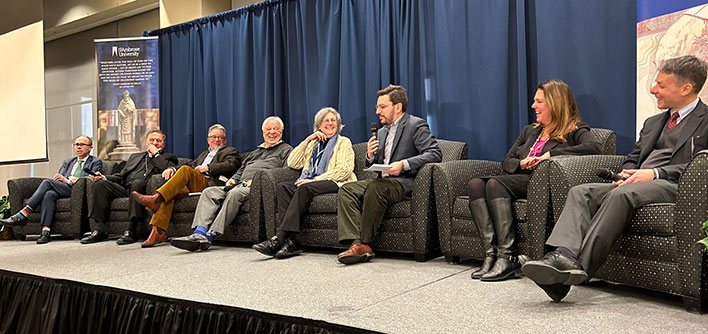
Barb Arland-Fye Francis at Ten conference speakers participate in a panel discussion March 18 at St. Ambrose University in Davenport. From left are Anthony Annett, Cardinal Joseph Tobin, CSsR, Austin Ivereigh, Thomas Higgins, Phyllis Zagano, Joshua McElwee, Kerry Alys Robinson and Massimo Faggioli.
By Barb Arland-Fye
The Catholic Messenger
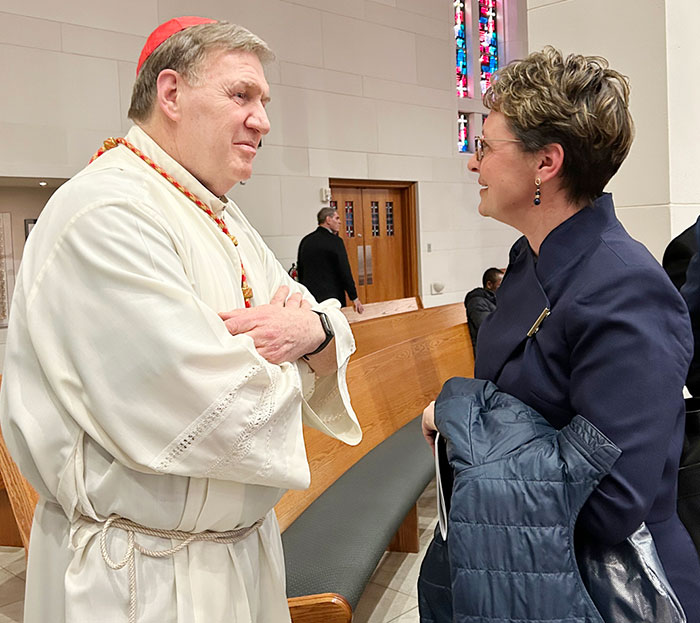
DAVENPORT —Cardinal Joseph Tobin, CSsR, infrequently accepts invitations to speak outside the Archdiocese of Newark, New Jersey, which he leads, but made an exception for “Francis at Ten: a Papacy of Possibilities” at St. Ambrose University. The synergy of distinguished speakers and the Diocese of Davenport’s exemplary approach to a centerpiece of the Holy Father’s papacy — the Synod on Synodality — drew Cardinal Tobin and other internationally recognized speakers to the conference March 16-18.
Pope Francis himself offered his prayers and invoked the “abundant blessings of Almighty God” on the conferees in a letter addressed to Bishop Thomas Zinkula. Archbishop Christophe Pierre, apostolic nuncio to the United States, read the letter to the gathering of 350 people — local, national and international, in-person and online.
The conference began with Solemn Vespers in Christ the King Chapel on campus with Cardinal Tobin, who serves on papal commissions, councils and congregations, presiding. He reflected on the importance of humility, “truly listening to one another and the Holy Spirit,” in becoming a synodal Church. He quoted Cardinal Robert McElroy, who referred to the three essential actions of Jesus: encountering, healing and calling to new life. Synodality “will only be experienced when everyone in the Church recognizes themselves as part of the holy and faithful people of God,” Cardinal Tobin said.
Each keynote speaker shared a unique perspective on the papacy of Pope Francis, which began March 13, 2013, when he appeared on the balcony of St. Peter’s Basilica and “greeted the throng with a simple buona sera” (good evening), Cardinal Tobin said.
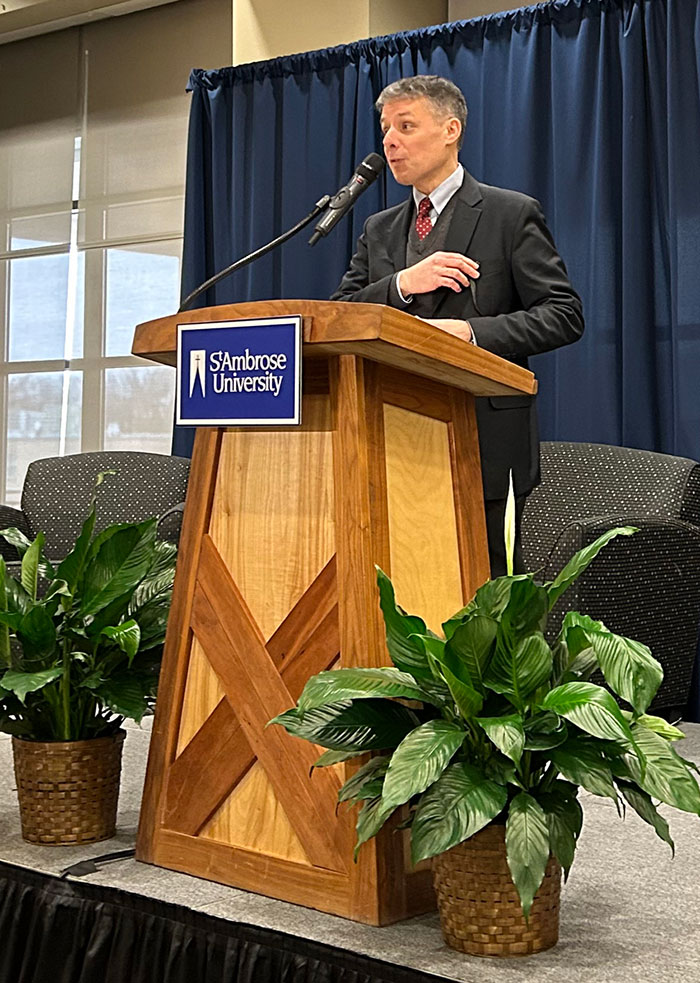
“The work of Pope Francis invites all of us to reflect on his call to mercy, justice, fraternity and synodality,” St. Ambrose University President Amy Novak said in welcoming remarks. Since its founding in 1882, the university “has embraced an ethos committed to serving the marginalized, an ethos rooted in a commitment to encounter.”
Pope Francis’ example of encounter — going out to the peripheries to share a meal with the hungry, visit the hospitalized, wash prisoners’ feet, advocate for refugees, travel abroad to promote peace, and engage in interfaith dialogue — served as the scaffolding for the eight keynote addresses and 12 breakout sessions.
Meet people where they are
“His papacy has already proven to be transformative,” said Thomas Higgins, a St. Ambrose alumnus and the primary sponsor and motivating force behind the conference. Pope Francis’ “historic
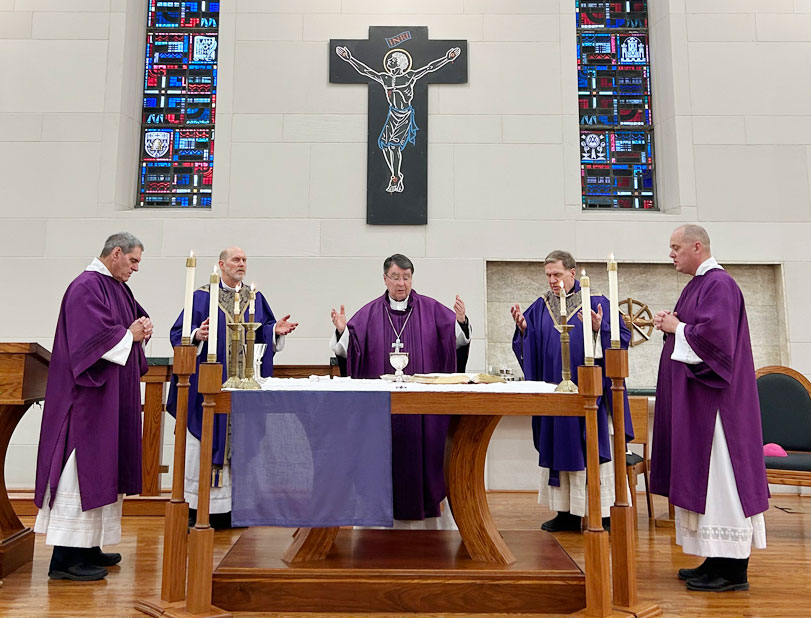
Barb Arland-Fye Archbishop Christophe Pierre, apostolic nuncio to the United States, presides at Mass March 18 in St. Ambrose University’s Christ the King Chapel in Davenport. From left are Deacon Dan Freeman, Bishop Thomas Zinkula, Archbishop Pierre, Cardinal Joseph Tobin, CSsR and Deacon Ryan Burchett. The Mass concluded the Francis at Ten conference.
encyclicals, reforms in church governance and transparency, the lifting of those on the margins of society — all of these demonstrate his true leadership. But even more than these achievements, Francis, by his example, has invoked the work of the Spirit in this, our time, to move forward with renewed faith and a joyful heart.” The pope “implores us to meet people where they are and to be inclusive in our evangelical mission, as was St. Paul, the Apostle to the gentiles.” Higgins said Pope Francis is reconnecting the global Church to the visionary teachings of the Second Vatican Council, reminding “us of its great potential.”
“Our Holy Father frequently admits that he benefits more from listening to his critics than his adulators,” Cardinal Tobin noted in his talk. “And, as a good Jesuit, he has no quarrel with a particular examen that helps him not only confront his setbacks but also glimpse the mysterious presence of God in the events of daily life.”
“Synodality, arguably the centerpiece of his service to the Church,” is “an invitation to discover anew the gift that has been given to us, the Holy Spirit so that we will know how to walk together,” Cardinal Tobin said.
“If we want a synodal Church, we need to ask ourselves if we believe that the Spirit manifests freely through all persons and their life stories, even in points of view completely different and diverse from our own positions. The latter is also a mediation of the Spirit that we often forget because it can be uncomfortable to listen, talk and discern in common,” Cardinal Tobin said. “Hence, the art of listening requires formation and experience, as well as to provide the necessary means at our disposal, in order to avoid empty discussions based on opinions or cultural wars.”
Accompaniment is essential in the synodal process even as “it flies in the face of what our society is saying at this time,” Cardinal Tobin said. Accompanying “says you go to each person and treat them in their individuality, you walk with them in grace, you embrace them.”
Synodality and evangelization
Austin Ivereigh, the pope’s biographer, referenced Pope Francis’ encyclicals, books and other writings, including those predating his papacy, to demonstrate the Holy Father’s longtime commitment to synodality even prior to using that term. “A synodal Church is an evangelizing Church,” Ivereigh said, noting that evangelization is the topic of Pope Francis’ current teaching and of this year’s Lenten reflections by Cardinal Raniero Cantalamessa, preacher of the pontifical household.
Ivereigh observed that Pope Francis’ teachings in the first decade of his papacy speak to the interdependence of God’s creation — the relationship of the people with God, with one another and with all nonhuman creatures. In his encyclical “Laudato Si’” (“On Care for Our Common Home”), Pope Francis addresses the three, intertwined relationships and the suffering caused by a rupture in these relationships.
The Holy Father has responded to this “triple rupture, which defines our time, with a triptych of teaching,” Ivereigh said: “Evangelii Gaudium” (The Joy of the Gospel); “Laudato Si’;” and “Fratelli Tutti” (On Fraternity and Social Friendship).
“On a deeply personal level, these ten years with Francis as our pope, has felt like a sign of God’s providence, affirmation and encouragement for so much of our labor,” said Kerry Alys Robinson. She is executive partner with Leadership Roundtable, which promotes best practices and accountability in the management, finances, communications and human resource development in the Catholic Church in the U.S., including greater incorporation of the expertise of the laity.
Robinson firmly believes that “laity, and in particular women, hold the key to positive managerial reform, the restoration of trust in the Church and in Church leadership.” Now is the time for the Church to welcome what the laity uniquely has to offer. “The abuse crisis was the catalyst for the formation of Leadership Roundtable and lay expertise was the resource we did not want to be squandered.”
She acknowledged that Pope Francis is not perfect but takes ownership of his mistakes and makes amends. “When it comes to leadership, Francis emulates what he advocates.” She describes him as a “pope of the people. A pope of surprises. A pope of tenderness. … He prioritizes dialogue and deep listening and seeks out diverse viewpoints.”
Robinson also addressed the synodal experience. “We simply need all voices, all backgrounds, all experiences, all wisdom. And the synod will be as effective as our own responsibility for it.” She singled out the Davenport Diocese for the “leadership and effectiveness of the synodal invitation” in the diocese.
“Let’s be the Church we yearn to see. A more relevant Church to young adults, a more joyful Church, a Church of integrity, ethics, trust, justice and openness,” she said. “A safe environment for the most vulnerable. A Church that values and invites the immense competencies of women. A Church worthy of profound generosity. A Church at the forefront of justice, peace and charity….”
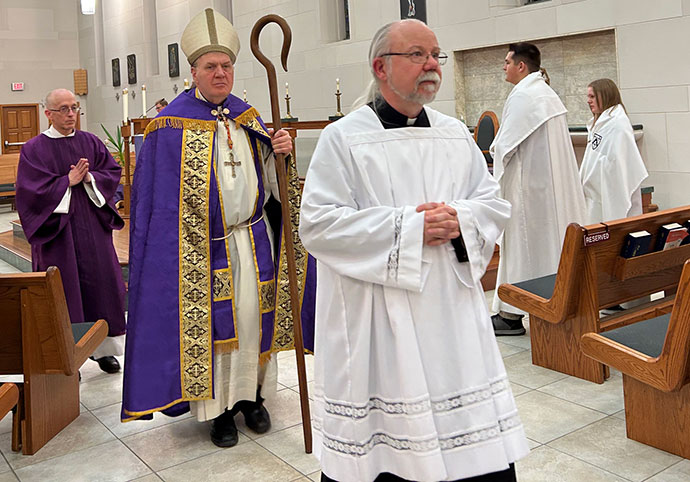
Barb Arland-Fye Cardinal Joseph Tobin, CSsR, follows Deacon Frank Agnoli out of St. Ambrose University’s Christ the King Chapel in Davenport after Solemn Vespers, which opened the “Francis at Ten: A Papacy of Possibilities” on March 16. Deacon Kent Ferris follows.
Balancing tension
Phyllis Zagano, who served on the original committee that Pope Francis appointed to study the diaconate of women, offered her assessment of the papacy of Pope Francis in light of the role of women and laity in the Church. She reviewed his encyclicals, as they related to Catholic Social Teaching and his actions and interactions pertaining to women.
The Holy Father, she said, “writes wonderful documents. He’s genuinely a good man. But Francis at 10 sometimes displays the same problems as Francis did at first. He too often insults women, surely unknowingly, with the same sort of old boy jokes and expressions men of his age have heard and used throughout their lives.”
She addressed the Church’s approach to the Synod, expressing some skepticism about whether the hierarchy respects the voice of the laity. She gives credit to Pope Francis for his inclusivity of voices. However, she noted that, depending on the parish, diocese or continent, synodal discernment has been limited. Not so in the Diocese of Davenport, which she singled out. “In the Diocese of Davenport, there are 85,648 Catholics, just 11% of the population. It reports a total of 6,802 synod participants, either in person or online, with some 14,000 comments. The Davenport report mentions women leaders, women deacons, women priests and quoted the comment that women are treated as second-class members of the Church.”
She believes many people have been cut out of the conversation in other places, many of whom are women. “Women are interested in being taken seriously and women are interested in being ministered to by other women,” Zagano said.
Bishop Zinkula, who is involved with the Synod from the diocesan through the continental phase, addressed the tensions the listening sessions have surfaced regarding the role of women in the
Barb Arland-Fye Professor Massimo Faggioli speaks during the “Francis at Ten: A Papacy of Possibilities” conference at St. Ambrose University in Davenport on March 18.
Church, LGBTQ issues, divorced and remarried Catholics, among other issues.
“People have been talking about a tension between truth and love. Love and mercy are at the heart of today’s Scripture readings,” the bishop said in his homily during Mass March 17. “Love is the very essence of God and the central message of the Good News of Jesus Christ. Mercy is the first attribute of God. Mercy has been a consistent theme of Pope Francis during his pontificate.” The Holy Father “embodies love and mercy through his words and actions.”
Bishop Zinkula said, “Tension doesn’t have to be a bad thing. There is a temptation to avoid it by embracing an either/or mindset. But the Church has always been both/and. Catholics are called to strive for synthesis, to hold seemingly contradictory truths in tension. As Pope Benedict XVI said, it all boils down to balance. Are we able to live with the tension of both/and? How is the Spirit inviting us to balance the tension of love/inclusivity and truth/doctrine?”
The common good
Anthony Annett, author of “Cathonomics,” which explores how Catholic tradition can create a more just economy, said Pope Francis’ approach to the market economy is in line with his predecessors dating back to Pope Leo XIII in the 1890s. Annett identified 10 directing principles, based on papal encyclicals of the past 130 years that ought to guide the market. Among the principles: the state has an important role to play in regulating the economy; solidarity, fraternity, reciprocity and gratuitousness must guide the economy; the role of business is not just to maximize profits; the dignity of work and workers’ rights must be emphasized; the goods of the earth are destined for all people.
“We need business to accept a responsibility for protecting the environment and to offer legitimate, sustainable development solutions,” Annett said. “We need consumers to make wise decisions when they are buying and investing.” He noted that Pope Francis is taking up the mantle of St. Ambrose, the university’s patron saint, by emphasizing a responsibility to the common good.
Professor Massimo Faggioli, who teaches theology at Villanova University near Philadelphia, focused on the importance of synodality in the local Church and enlarging the tent of the “field hospital” (a term coined by Pope Francis) at that level. Pope Francis has likened the Church to a field hospital in which healing the wounds and warming the hearts of the faithful is essential before addressing their lesser, though still serious, health challenges.
Faggioli also spoke about synodality and the need to clarify its meaning. Vatican II addressed synodality at the universal level, which opened up important doors in the local Church, he said. “We need to recover a little more of the religious, Christian, Catholic idea of the journey together.” Synodality within the local Church is “more about staying and living together. It’s not an adventure. It’s a home and a family… I believe there is an urgent need to liberate ourselves from grandiose ideas of synodality.”
One document from Vatican II that he believes speaks to the local Church is the Constitution on the Liturgy, which makes the connection between the Eucharist and the local Church. “We celebrate the Eucharist and the sacrament in the local church, in a real church.”
Faggioli referenced the “wounds” in today’s Church — polarization, the culture wars, material wars among them. “What the Church is going through now, and not just the Catholic Church, is that we live in a system where the individual doesn’t feel any longer included…. This has created a culture of talking to the Church rather than talking with the Church or talking as part of the Church,” he said.
He identified a need “to listen, period.” In today’s culture, “you speak before you exist. In biblical culture, it is the opposite. We exist because we have been spoken to by God, by parents, by teachers.” This concept is difficult but necessary to re-inject in the synodal process, he said.
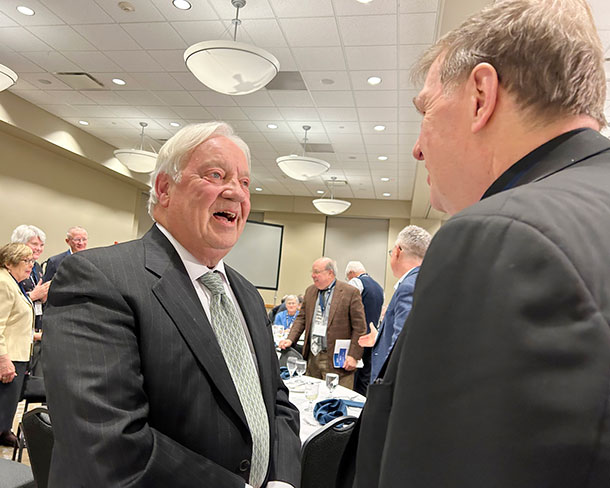
Barb Arland-Fye Thomas Higgins chats with Cardinal Joseph Tobin, CSsR, during the “Francis at Ten: A Papacy of Possibilities” conference at St. Ambrose University in Davenport on March 16.
Guided by the light of Christ
Participants expressed appreciation for all of the keynote talks, including one by Joshua McElwee, news editor of the National Catholic Reporter, who covered Pope Francis for his publication for a number of years.
Chris O’Brien, a doctoral student at the Catholic University of America, said his takeaway from the conference was “the unique perspectives on Pope Francis that, together, give a well-rounded view of his papacy.”
Dan Darst of St. Louis, who with six other friends at the conference attended seminary at St. Ambrose years ago, said he takes away a message to “stay hopeful.”
Mo Hart of LeClaire said the conference inspired her to “remain open to the breath of faith and the strength of that breath.”
John Errante of the Kansas City, Kansas, region said after the conference, “I have work to do. I feel called to action.”
He made a new friend at the conference, Daniel Salazar, a senior at St. Ambrose University. The two were deep in discussion when The Catholic Messenger asked for their feedback about the conference. Salazar’s takeaway: “We have allies. We should find ways to work with those allies.”
Barb Arland-Fye Cardinal Joseph Tobin, CSsR, of the Archdiocese of Newark, N.J., speaks with St. Ambrose University President Amy Novak at the Francis at Ten conference.
The conference concluded with celebration of the Mass, with Archbishop Pierre presiding. In his homily, the apostolic nuncio focused on the Gospel for the fourth Sunday of Lent, the story of Jesus’ healing of the man born blind (John 9:1-41). “Each of us must be willing to let Jesus address our own blind spots,” the archbishop said. “Each of us must be willing to admit, ‘I do not see everything clearly.’”
“As for the healed man in today’s Gospel, so also for us,” Archbishop Pierre said. “Discipleship carries both a challenge and a promise. We do not face the challenges by our own power. The one who is the light of the world will illuminate our hearts with the splendor of his grace so that we may ponder what is pleasing to God and love him in all sincerity.”
Letter from Pope Francis
Letter of Pope Francis to Bishop Thomas Zinkula, read at the St. Ambrose University’s “Francis at Ten: A Papacy of Possibilities.”
“I offer greetings and cordial good wishes to all gathered for the international symposium, sponsored by Saint Ambrose University, marking the tenth anniversary of my election as Bishop of Rome. I thank the speakers and all who worked to make this occasion possible.”
“The symposium takes place as the whole Church is undertaking a synodal journey aimed at renewing the spirit of missionary discipleship in the local churches and enhancing their bonds of communion with the universal Church. This journey is born of the firm conviction that the Holy Spirit is calling the faithful to place their baptismal gifts at the service of building up the Body of Christ (cf. Eph 4:12) and society as a whole.”
“It is my hope that the conversations and dialogue of these days will enable participants to make their own contributions to the synodal process by responding to the promptings of the Spirit and discerning, in union with the Success of Saint Peter, new and creative ways of bearing witness to the joy of the Gospel and of advancing God’s kingdom. Since the Church’s evangelizing mission also entails that of active charity, I trust the symposium will encourage all involved to take concrete and effective steps to serve the most vulnerable of our brothers and sisters, work for greater reconciliation, justice and peace within the human family and care for our common home. In this way, they will be able to proclaim the truth, beauty and love of Jesus Christ not only with words but above all with lives transfigured by God’s presence (cf. Evangelii Gaudium, 259).”
“With these sentiments and with the assurance of my prayers that the conference will bear good fruit, I invoke upon those present the abundant blessings of Almighty God.”
Rome, from Saint John Lateran, 20 February 2023
– Francis
Barb Arland-Fye
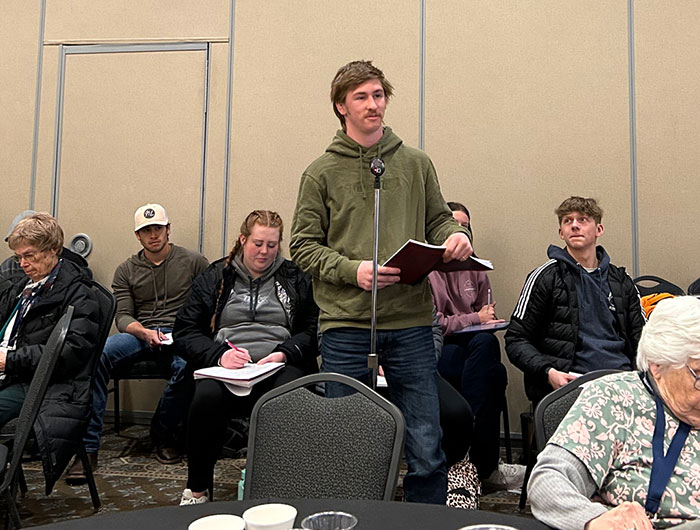
A St. Ambrose University student asks a question during the Francis at 10: a Papacy of Possibilities conference March 16-18 at the Davenport university.
Barb Arland-Fye
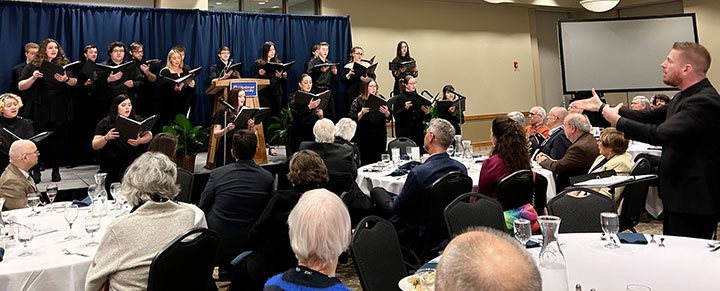
A vocal ensemble from St. Ambrose University in Davenport, directed by associate professor Nathan Windt, performs original music during the Francis at Ten: a Papacy of Possibilities conference March 16-18 at the Davenport university.
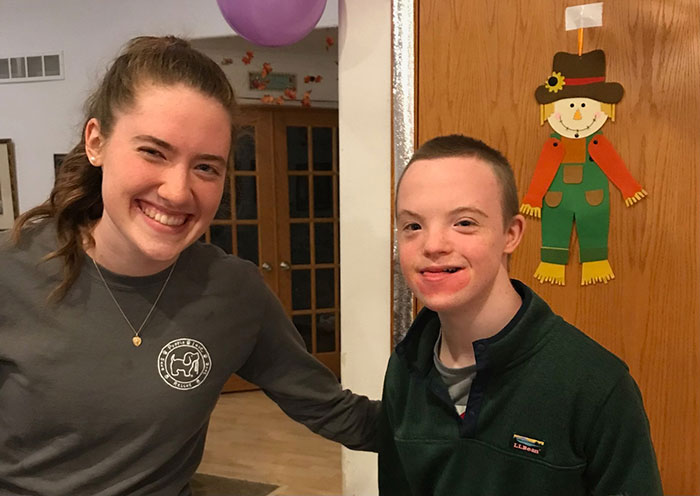
Contributed Jacinta Hamilton with her brother Gabriel.
By Jacinta Hamilton
Guest Column
On March 21, we observed World Down Syndrome Day — a celebration of the countless individuals who bless our world with this condition. However, the fight to recognize the value of their lives continues. In our country, approximately 74% of expectant parents choose to abort their unborn child with Down syndrome. Other countries experience even higher rates of abortion, including Ireland and Iceland.
This brutal landscape belies the beautiful experiences of families who choose to give life to babies with Down syndrome. The reality is Trisomy 21 (another term for Down syndrome) is not a death sentence; it’s a blessing. I believe we are at a moment of grace in this country where we can bring deeper and more profound attention to human life with special needs. Ultimately, I think the personal stories and the faces attached to the diagnosis will change hearts.
Fourteen years ago, upon learning that my little brother was born with Down syndrome and would do some things more slowly than his siblings, my 8-year-old self spontaneously responded with, “It’s not a race!” Words cannot express the blessing that Gabriel is to his parents, six siblings and his many other family members and friends.
This young man has an overwhelmingly powerful influence on those who know and love him. He makes life fuller and richer in every way! Gabriel is the most loving and self-giving person I know and I believe he has his finger on the pulse of what life is truly about. There is not a thing about him I would change. The fullness of Gabriel’s life is not measured by his external abilities, but rather his eternal value as a child of God.
Just before we entered the hospital room, my dad told my siblings and me that there was something extra special about our new brother, Gabriel. In my dad’s words, we had a beautiful and healthy baby brother who was truly a blessing to our family. Dad told us that Gabriel had what is called Down syndrome. He said that Gabriel was perfect and needed lots of our love. He also said that it might take Gabriel longer to learn how to do certain things. Dad said it was not really a big deal because we were all going to help Gabriel.
I distinctly recall telling Dad in a matter-of-fact way: “Well, it’s not a race, Dad!” Where that came from, I cannot tell you. It has become my mantra. Life, learning, and achievement are not diminished by a “disability.” Without being able to express it at the time, I somehow knew that Gabriel’s Down syndrome was a small part of him; it was not his identity.
“I just felt blessed,” was my mom’s response to what she felt when she learned of Gabriel’s diagnosis at birth. This was a grace. I do not mean to indicate that other responses are not genuine or appropriate. However, my mom’s response shows that a special needs diagnosis does not need to be a moment of grief but rather a celebration of life.
My own experiences tell me that yes, a child with special needs will affect your family life, but in the best possible way! Even though Gabriel may not conform to the ideals of society, he clearly teaches me that life, learning and achievement are not a race. It is a lesson that permeates all aspects of my life.
Persons with special needs have been targeted as not worthy of life for far too long. Our Creator endowed us to reverence all human life. Seeing all life through a lens that celebrates the dignity, self-worth, intrinsic value and the immortal soul of each person will enable us to defend strongly all human life from conception until natural death.
We cannot compromise the right to life. We must exercise our free will in defense of the most vulnerable. I echo the words of St. John Paul II, who said, “Freedom consists not in doing what we like, but in having the right to do what we ought” (Apostolic Journey to the United States, 1995). My hope is that Gabriel’s story will inspire others to see the infinite value of individuals with special needs in their own lives.
(Jacinta Hamilton is a senior at the University of Iowa majoring in elementary education and a parishioner at St. Wenceslaus Parish in Iowa City.)
The story of the raising of Lazarus is found only in the Gospel of John. There is certainly miraculous beauty found here, but underneath it all runs a current of truth we’d rather not face.
Father Epping
Lazarus’ death, it seems, was untimely. He was a close friend and contemporary of Jesus when he fell ill, but whether or not he was a young man is never said. When Jesus eventually makes his way to Bethany, four days after Lazarus has died, he weeps. Then, Martha and Mary lead him to Lazarus’ tomb.
There, Jesus yells at Lazarus and Lazarus comes forth, hobbling out of his tomb wrapped in bandages. “Unbind him,” Jesus says. “And let him go.” And that is all we know about Lazarus. A man brought back from the darkness of death, the recipient of Jesus’ greatest miracle, Lazarus drops from the scene right here and is never heard from again.
Lazarus does not go on to be Jesus’ most devoted disciple. He does not preach inspiring sermons. He does not visit the sick and console the dying. In fact, he doesn’t utter a word before he disappears forever. He is alive, though; a walking miracle brought back to life. But that life is only temporary. Sooner or later, Lazarus will be carried back to his tomb and this time for good.
Herein lies that current of truth — we must all, finally, die. As fervently as we pray for healing and long life, and as glad as we are on the occasions when those prayers are granted, we must all die. Is there anything in the world we would like more than to make sense of everything? To know why, and when and how we die? To know where death fits into the divine life of all things? To have reliable evidence that death is just a door into a life where everything makes sense. If there is one word our hearts can be counted on to cry out when we are afraid, it is “why?”
It is not explanations we’re looking for, though, but security and a sense of control. “Tell me why, God,” we say. “And maybe I can convince you why not.” “Give me something I can work with, God,” we say. “But do not ask me to step out into the air without a net.”
The cry of the human heart — “Why me, why this, why now? Why you have forsaken me? My God, my God, why have you abandoned me?” Those are the words and questions we ask our God and they tell us the truth about what we feel when we cannot make sense of what happens to us and when we are given no reason at all.
We are in good company here. They are not just my words and your words. They are the words of the prophets and they are Jesus’ words. To have faith in God, faith that we are in good hands, faith that whether or not we understand everything, the universe makes sense — that is the hardest choice any of us has to make.
Do I decide to step out into the air without a net even if I don’t have much evidence of anything at all? I guess that all depends on whom we believe and if we believe. If belief is there, even a little bit, then we learn to simply give up the illusion that we are in control of every aspect of our lives and, so, step out and into the air. Which is why, perhaps, we call it a leap of faith.
(Father Ross Epping is chaplain of St. Ambrose University in Davenport and pastor of St. Peter Parish in Buffalo.)
Contributed Gloria Casas stands with a statue of Our Lady of Fatima.
By Barb Arland-Fye
Editor
After a friend hosted the crowning of a statue of Our Lady of Fatima in her home 20 years ago, Gloria Casas began a persistent appeal to host a crowning ceremony in her own home in Muscatine.
Arland-Fye
A month ago, she received an answer to prayer. The America Needs Fatima Campaign called to arrange for a replica of the International Pilgrim Virgin Statue of Our Lady of Fatima to spend a few hours in Gloria’s home on March 9. Her joy filled the house, adorned inside with statues and paintings of Mary and other beloved saints, including Juan Diego.
“I waited 20 years to have her in my house,” said Gloria, who whenever she sent a donation to America Needs Fatima included a note asking, “When are you bringing Our Lady to my house?” Actually, she received her first hosting invitation in 2020, but reluctantly declined because of the pandemic. The organization called back in February to see if she was still interested. “Sure,” she said. “I’ve been waiting a long time.”
Gloria began preparations in earnest. She invited friends from her parish, Ss. Mary & Mathias in Muscatine; her pastor, Father Chris Weber; Father Hai Dinh, who previously served at the parish; and other guests. She spent three days cleaning the house and hours making seven dozen pork-filled tamales with another woman to serve to guests.
Her excitement turned to worry when forecasters predicted snow, possibly heavy, the day of the crowning. She sent a text message to Father Hai, saying she was praying for the snow to stop. He said he advised her not to pray for the snow to stop. Instead, she should pray for “no snowing in people’s hearts and for the love of the Virgin to be in their hearts so that they will come to the crowning even if it is snowing.” His response reassured Gloria.
The day of the statue’s anticipated arrival, an America Needs Fatima representative called to ask if Gloria would like to cancel because of the weather. “Are you kidding,” she responded. “I’m cooking all of these tamales and expecting all of these people.”
Other unexpected obstacles tested her resolve but she kept the faith. About 15 of the 30 invited guests arrived at her house, along with the representative and the statue. “It just melts your heart when you see her,” Gloria said of the statue. “She’s so beautiful.”
Asked if she would like to crown Our Lady of Fatima, she answered, “I don’t know if I’m worthy, but I’ll do it.” Later, the representative asked Gloria if she could keep the statue overnight while he stayed in a hotel because of the weather. Generally, hosts have the statue for just a couple of hours.
“I’d be honored to have her here,” Gloria told the representative. A friend stopped by later that evening to pray the rosary in front of the statue. The next morning, Gloria prayed the rosary in front of the statue. “She looks at you with these beautiful eyes … it’s like she’s talking to you,” Gloria said. The representative picked up the statue to take to another home in another city.
While she was sad to see the statue go, “I knew it was just for a little while,” Gloria said. “I’m glad she stayed overnight. Something good came out of the bad weather. That left her here overnight.”
(Contact Barb Arland-Fye at arland-fye@davenportdiocese.org)