



 By Father Andrew Rauenbuehler
For The Catholic Messenger

As solicitors seek donations from Scrooge for the impoverished in Charles Dickens’ “A Christmas Carol,” one of them says this about Christmas: “It is a time, of all others, when want is keenly felt and abundance rejoices.” And isn’t this the truth? This season stirs many hearts to give generously so that others might enjoy a fuller and more hopeful holiday. And yet, there is also a sense that the joy of Christmas runs parallel to the number of things we have.
Rejoicing in abundance reveals something important: our culture tends to equate joy with having more — more food, more gifts, more activity — while true Christian joy is something far richer. I am not looking to diminish the goodness of family dinners or the beauty of exchanging gifts; these can be genuine sources of delight. But they are only hints of a joy far greater, the joy for which every human heart longs: the eternal banquet of Heaven, where we will rejoice in the presence of Christ.
And so, Dickens’ phrase “abundance rejoices” invites a further Christian reflection: Is joy only found in acquiring more or can we rejoice even in our lack? Can filling our lives with possessions ever guarantee lasting happiness?


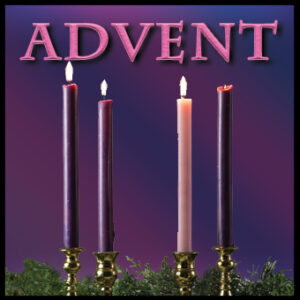
This Third Sunday of Advent — Gaudete Sunday — the Church commands us to “Rejoice!” This is often accompanied by St. Paul’s exhortation to the Philippians: “Rejoice in the Lord always. I shall say it again: rejoice!” For many, this command may feel out of reach. Perhaps you find yourself in a season where joy seems distant because of a definite lack of something. We live in a world with problems as broad as death, war, and disease — and by burdens as personal as shame, loneliness, and fear. These are real, and they can make rejoicing seem impossible.
But Paul knew this well. He was not urging us to ignore our circumstances or pretend our struggles are insignificant. He was reminding us not to let these realities steal Christian joy from us. After all, Paul wrote those words from a prison cell — not from a seaside villa overlooking the Mediterranean. He was confined, yet his joy was not. Why? Because he knew that true joy does not depend on perfect circumstances or perfect performance. It does not arise from the abundance of possessions; however good they may be. Christian joy is rooted in the perfect love of Jesus Christ, the God who comes to be with us not only in moments of gladness but also in the moments when life feels most fragile.
Elsewhere Paul even rejoices in his weaknesses — a strange thing unless we understand why. His weaknesses reminds him of his need for a Savior. The very places where we recognize our poverty — our lack of abundance — are the places where we most clearly see our need for Jesus to come. As Isaiah proclaims in this Sunday’s first reading, and as Jesus confirms in the Gospel, it is not the self-sufficient but the blind, the deaf, and the lame in whom the power of God is made manifest. These apparent lacks become places of encounter with the power of God.
As we hear the command to “rejoice” this week, it is good and right to give thanks for all God has already done in our lives. But to learn how to rejoice always, we might also ask the Lord to help us rejoice in our places of need — because these are precisely the places where he desires to come and fill us with his joy.
(Father Andrew Rauenbuehler is pastor of St. Mary Parish in Iowa City and Director of Vocations for the Diocese of Davenport.)