




 By Dan Russo
The Catholic Messenger
(The names of the medical students featured in this article have been changed to protect their identities.)
DES MOINES — The Medical Ethics Defense (MED) Act, a measure that provides enhanced conscience protections to medical practitioners and healthcare institutions, was passed by Iowa legislators in March. Supporters are hoping it will bring peace of mind to Catholics and others who are attempting to navigate an increasingly contentious moral landscape in the healthcare field.
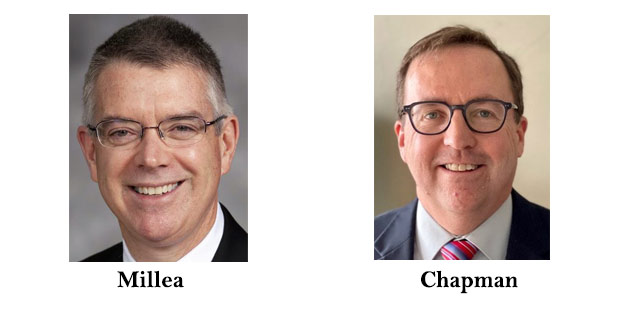
“It all comes down to protection of first amendment rights,” said Dr. Tim Millea, state director for the Catholic Medical Association (CMA). “That’s the primary reason (we support the bill).”


Although still awaiting Gov. Kim Reynold’s signature as of press time, assuming the measure clears this final hurdle, Iowa would become the 13th state in the U.S. to enact new medical ethics laws. The CMA worked with the Iowa Catholic Conference (ICC), The Christian Medical/Dental Association and secular pro-life atheists, among other groups, to lobby for the law.
Also known as HF 571, the legislation gives practitioners and organizations “the right not to participate in or pay for” a healthcare service that violates their conscience. Whistleblower protections are also given. In addition, physicians and other practitioners are not required to refer patients to other providers if they object to procedures, but are still mandated to provide necessary emergency care, according to the measure.
“The right of conscience is a fundamental right of human beings,” said ICC executive director Tom Chapman. “No medical practitioner or medical entity should be forced to participate in providing a procedure or medication to which he or she has an objection of conscience, or violate their oath to do no harm.”
Beginning in 1973 with the Church Amendment, a series of U.S. federal laws protected practitioners from being forced to participate in abortions. Because of new developments in medicine those laws are no longer adequate, according to the CMA.
“You look at the growing number of issues,” said Millea, a retired orthopedic surgeon who had a practice based in Bettendorf. “It’s gone from abortion to sterilization, contraception, assisted suicide, gender transition. In the great scheme of healthcare it’s a relatively limited number of issues, but these are very emotional issues and they all boil down to the question of autonomy — thinking for myself … (As a patient), you can make up your own mind. I understand that, but (as a doctor) I’m going to tell you what I think is best for you and your family and friends. Why shouldn’t somebody working in healthcare have a right to their autonomy? To say what they think instead of being forced to do and say things they disagree with.”
Millea said he is unaware of any healthcare workers in Iowa losing their jobs or facing discrimination for refusing to provide or refer patients for controversial treatments. He said, however, that such incidents have happened in other states and could happen eventually, which is why the bill was introduced.
Dr. Austin Baeth, a Democrat representative from Polk County who is also a physician, voted against the bill. In a March 31 video posted to social media, he urged citizens to contact the governor.
“(The MED Act) has potentially really wide ranging repercussions of people not getting the care they need, especially in rural Iowa …” he said. “In my opinion, no patient should have to go into a doctor’s office or a hospital hoping that that doctor might happen to be of the same religious beliefs or hoping that that doctor will not pass judgement on some life choices that the patient has made. You should expect your doctors to just take care of you because that’s the Hippocratic Oath that they took. This bill has gone to the governor’s desk. I am hoping governor Reynolds will decide to veto it. It’s up to you now to encourage her to do so. Iowans need things to improve their access to medical care, not hinder it.”
Millea countered that many of the “best and brightest” are opting out of going into the medical field due to lack of conscience protections. The act could lead to more people entering the field, which would improve healthcare access, he said.
Students speak
A group of Catholic medical students studying in Iowa confirmed that they have felt pressure because of their beliefs. They wished to remain anonymous when talking to The Catholic Messenger because they feared possible career repercussions if their views were known by school officials or possible employers. Luke explained that in a classroom setting he was told objections to prescribing certain drugs or procedures for the treatment of gender dysphoria would have consequences.
“A lot of people who think differently are pressured into silence,” said the student. “We were told, ‘You don’t have to violate your conscience, you just can’t go into family medicine, OBGYN (Obstetrics and Gynecology), pediatrics or psychiatry …’ These are specialties Iowa needs.”
Luke said he wants to be a doctor to heal people so he is sticking with school, despite obstacles.
“If you think differently, you shut up and put your head down,” he said.
Martin, another medical student, wanted to be a businessman until an experience he had while working as an EMT made him change course. A man had a heart attack and collapsed on a highway. At 18, he and a partner helped the patient survive.
“When someone thanks you for saving their life, that’s something that no amount of money, no business could ever give you,” Martin recalled.
Martin believes the MED Act is needed. Current federal conscience protections focused only on abortion and need to be expanded, according to him.
“The writing of this bill is intentionally broad,” he said. “If new procedures come out that are morally objectionable, and they do all the time, (the act) would still apply to those.”
Martin believes the fact that the bill doesn’t require providers to make referrals for procedures they don’t support is also important.
“I think people should want a physician who believes in what they’re doing and you wouldn’t want someone having a moral dilemma holding the knife over you when you’re in the operating room,” he said. “I can understand how certain people might think (this bill) would hurt certain populations, but the good definitely outweighs the bad here. This bill isn’t going to allow any one physician to discriminate against any one population. This bill is about protecting the physician … It’s preventing physician burnout and physical harm in some cases. It’s placing that just a little bit above the patient’s wishes. The people who want those procedures still have 100% access to get them. It may just take a few more steps.”
For Tobias, another student, faith fuels his desire to be a physician.
“My decision to pursue a career in healthcare was deeply rooted in my desire to care for patients with compassion and dignity, striving to treat each person as Christ would,” he said. “I experienced anxiety pursuing this field due to the possibility of facing discrimination or losing opportunities if my values conflicted with those of supervisors or institutions. Many of my classmates who share similar values expressed the same concerns.”
The MED Act helps address some of the problems, Tobias said.
“In a time when Iowa is facing a shortage of healthcare workers, this kind of protection can encourage more people to enter and remain in the field,” he explained. “The MED Act ultimately strengthens the healthcare workforce and gives protections to those who are passionate about their morals.”
The CMA is trying to get similar conscience protection laws passed in all 50 states.
“If some states have this and some states don’t … it’s kind of like a healthcare Mason-Dixon Line,” said Millea. “We are going to get a two-tier system.”
