





Former Burlington resident Tommy Murray talks about his latest book, “The Empty Set.”
By Tom Murray
Guest Column
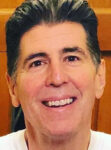
The word “sophomore” comes from the Greek roots sophos (wise) and moros (foolish) — a “wise fool.” In the fall of 1972, I was living up to that title in Sister Mary Celine’s geometry class at Burlington Notre Dame High School. I maintained a tenuous D, a grade more a testament to her mercy than my understanding of mathematical theorems. I was a know-it-all who knew nothing.
Then, one routine day, Sister Celine began explaining the empty set — a unique mathematical set containing no elements. I sat up and listened, and my life changed forever with that lesson.
I was captivated by the paradox. How could nothing be a defined something? I felt called not only to understand emptiness but also to write a novel in which characters wrestled with that very mystery. I learned that emptiness is a foundational concept in Buddhism, a call to let go. But on that day, in that classroom, it felt like a call to begin — a vocation whispered in the language of mathematics.


Extraordinary teachers at Notre Dame nurtured that call. In literature classes, Sister Jose read to us daily from Jonathan Livingston Seagull, her voice soaring with expression and joy. Mr. Mick Shettler taught the American novel, guiding us through “The Pearl” and “Of Mice and Men.” He explained that Steinbeck wrote like a man telling a story around a campfire. That style resonated deeply; it was the same way my friends and I shared tales while waiting for catfish to take the stinkbait on the banks of the Mississippi. I devoured Steinbeck, and as a senior, I tackled “The Grapes of Wrath.” I could not put it down.
After graduating in 1974, I worked as a night watchman. During the long, quiet hours, I dedicated myself to reading the great American Irish Catholic novelists: James T. Farrell, Edwin O’Connor, Pat Conroy, and John Kennedy Toole. Their voices — full of faith, doubt, and humanity — kept me company and shaped my own writing dream.
I finished my novel, “The Empty Set,” in 1984. But after rejection letters stacked high, I placed the typed manuscript in a box at the back of my closet, where it sat for decades. Life took over: a 33-year teaching career in Minneapolis public schools, raising four children, and welcoming my first grandchild. The long days of high school had condensed into short years and even shorter decades that passed in a blur, yet the lesson of the empty set never left me.
Then, in 2017, my son John encouraged me to dig out that old box. “Type your story into the computer,” he said. His sage advice for revision was simple yet profound: “After you write the opening sentence, make sure each following sentence is stronger than the previous one.”
This past September, after 40 years of wandering and wondering, I finished a second version of The Empty Set. The journey brought me back to where I started, but with a wiser heart. My novel’s high school sophomore protagonist, Michael Moriarty, writes in the final pages of his personal narrative: “I am a subset of all sets. We all are — threads in a tapestry of little families, big families, and the sprawling, chaotic story of humanity. In the emptiness left by loss, I’ve become them. They live in me now. In death’s vast emptiness, we become everything. Emptiness means next.”
My quest was never really about mathematical theory. It was about the grace found in a teacher’s patience, the spark of a divine idea, and the lifelong vocation to tell a story. The School Sisters of Notre Dame taught us that you can’t run from, but only run to, a vocation. “The Empty Set” was a beginning filled with potential, much like the blank page of a novel.
“The Empty Set” is also the second installment of my Iowa Trilogy, following “Fathers, Sons, and the Holy Ghosts of Baseball” (2017).
If you have an unpublished story — in a box, a drawer, or your heart — let it go, out and onto your keyboard and into the world. Do not fear the empty page. Emptiness is not a void, but potential, a space awaiting creation.
(Tom Murray, a graduate of Notre Dame Catholic High School in Burlington, is a parishioner of St. Joan of Arc Parish in Minneapolis.)
